TecnoTales – AI, Robotics, 5G & Future Technology Insights

How Artificial Intelligence Changes the Future of the Accounting Industry?
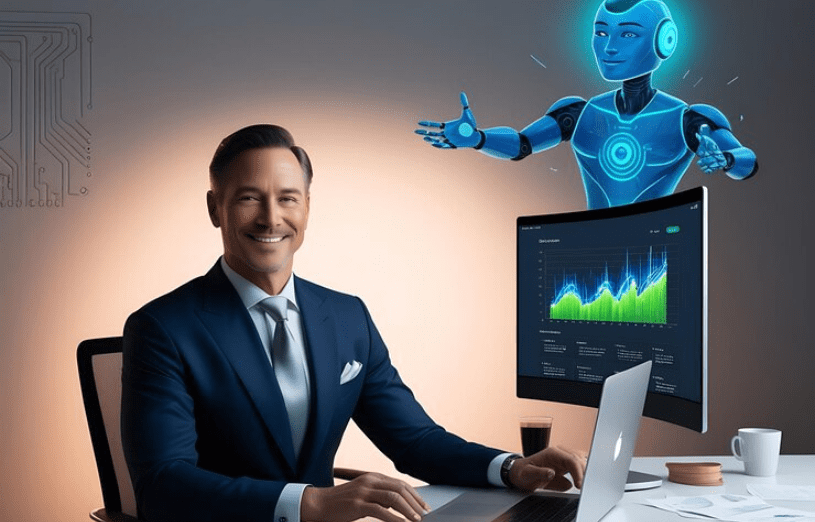
The accounting industry has always been at the core of business operations, ensuring accuracy, compliance, and financial transparency. However, with the rise of Artificial Intelligence (AI), the way accountants work is undergoing a dramatic shift. From automating repetitive tasks to providing predictive insights, AI is reshaping the future of accounting. Businesses that adapt to these changes will not only stay competitive but also achieve higher efficiency and profitability.
At TecnoTales, we provide only information, and in this article, we will explore how Artificial Intelligence is transforming the accounting industry, its benefits, challenges, and what the future holds.
The Role of AI in Accounting
Automating Repetitive Tasks
Traditional accounting involves manual data entry, invoice processing, and reconciliations time-consuming tasks prone to human error. AI-powered tools can now handle these repetitive tasks with speed and accuracy. This automation frees accountants to focus on strategic decision-making rather than mundane activities.
Enhanced Accuracy and Compliance
AI systems are designed to detect anomalies, flag errors, and ensure compliance with financial regulations. By minimizing the risk of inaccuracies, businesses gain more reliable financial data. This is especially crucial in industries with strict regulations, such as healthcare, where even small errors can lead to significant consequences.
Predictive Financial Analysis
AI doesn’t just record the past—it predicts the future. By analyzing historical data, AI systems can forecast revenue trends, detect risks, and guide businesses in making informed financial decisions. Accountants can now play a more advisory role, guiding business strategies with data-driven insights.
How AI Improves Accounting Processes
Smart Audit and Fraud Detection
Auditing has traditionally required extensive manual review. AI-driven audit tools can analyze thousands of transactions in seconds, identifying unusual patterns that may indicate fraud. This ensures financial integrity and provides businesses with a higher level of security.
Cloud-Based Accounting and AI Integration
Modern AI tools integrate seamlessly with cloud-based accounting software. This enables real-time data access, efficient collaboration between teams, and improved client communication. Businesses gain flexibility, as accountants can work from anywhere with accurate data at their fingertips.
Cost Efficiency
By reducing the need for manual labor and minimizing errors, AI helps organizations cut costs. Small and medium-sized enterprises, in particular, benefit from AI because it allows them to achieve enterprise-level accounting capabilities without large financial investments.
Automating Auditing with AI: Accuracy and Efficiency Redefined
It is also a very efficient way to penetrate the audit market using some of these ideas I mentioned above. Audit is now evolving from sample transactions to all data values through AI. The process of being this holistic allows for a precise and productive behavior audit. Programmed with the power of AI, machine learning and other related technologies like big data, these tools are designed to catch faster than light any anomalies or errors while some fraudulent work is going unnoticed in a manually audited environment. This provides high reliability of completed audits and decreases cost and time which allows the auditors to focus on reviewing the results, giving strategic advice.
Personalized Financial Advisory Services: Building Relationships with Your Clients
The accountants are rapidly deploying AI to provide financial advisory services. Through using data analytics powered by AI, accountants can provide individualized financial guidance perfectly catered to his/her clients’ personal needs and goals. AI increases the level of service whether optimizing investment strategies, tax planning or retirement savings.
Until recently only available for the firms’ top clients, this tailored perspective is now more generally available, allowing your firm to better customize relationships and stand out in a tough competitive market.
The Future of Accountancy: Embracing Opportunities and Tackling Challenges
Although Artificial Intelligence is making its way through the future of accounting, it beckons golden opportunity as well as hurdles and obstacles. Opportunities are ready to be seized and challenges await professionals and businesses taking their first steps in this new era.
Opportunities for Accountants: Realizing the Possible
The introduction of AI in accounting processes brings us a plethora of opportunities where an accountant can level up his/her skills and grow their career. As such, accountants proficient at AI-powered tools and technologies will be leading the industry while securing strategic positions as financial analysts, data scientists or even advisers to AIs.
AI, however also enables accountants to provide more value-added services by furnishing data-driven insights and recommendations. Moving away from transactional activities to strategic advisory roles is a compelling change accountants can make and use it as a springboard for professional development.
Challenges and Ethical Considerations: How to Negotiate the Moral Minefield
The ability of AI to offer unique benefits is powerful, but also includes challenges and ethical questions we cannot ignore. Job loss from job automation by AI Doing away with a routine role using AIOlympia Oghlakyan on I in Artificial Intelligence However, this same challenge creates an opportunity for accountants to level up their skills in becoming something closer related to human judgment and creativity roles.

As AI systems grow in complexity, so too do ethical concerns. There are real risks of AI being used to falsify financial data or engage in unethical behavior, and accountants need to guard against this as appropriate for the individual profession.
Changing Accountant Brief: The Long Run of Transformation
Accountants’ work is changing dramatically as AI changes the accounting sector. Through some of my posts here, I break down the main benefit of a business, which is that accountants are more essential than ever. Completing strategic tasks relying on conceptual thought and innovation, AI prolongs it rather than replacing payroll. Accountings are responsible for translating AI-generated data, creating novel solutions, and steering the integration of ethical use by accountants.
The future of accounting is not AI replacing human expertise. The answer to that discretion depends on a powerful partnership between it and accountants, where they work together for extraordinary outcomes.
Conclusion
Artificial Intelligence is no longer a distant concept—it is a reality shaping the accounting industry today. From automation and fraud detection to predictive analysis and strategic advisory, AI is revolutionizing how businesses manage their finances. While challenges exist, the benefits far outweigh the risks. Firms that embrace AI early will be well-positioned to thrive in the digital future.
At TecnoTales, we provide only information, and our goal is to help you understand how technology like AI is redefining industries, including accounting. Just as students search for “pharmacy tech school near me” to secure their future in healthcare, accountants and businesses must embrace AI to secure their future in finance.
FAQs
1. How is AI changing the role of accountants?
AI is automating repetitive tasks, allowing accountants to shift their focus toward strategic advisory roles and client services.
2. Will AI replace accountants completely?
No, AI will not replace accountants. Instead, it will enhance their capabilities by automating tasks and providing better insights for decision-making.
3. What are the main benefits of AI in accounting?
The main benefits include increased productivity, cost savings, fraud detection, predictive analysis, and improved compliance.
4. What challenges do businesses face when adopting AI in accounting?
Challenges include high implementation costs, the need for skilled professionals, and concerns about job displacement.
5. How can small businesses use AI in accounting?
Small businesses can adopt cloud-based AI tools for bookkeeping, invoicing, and fraud detection. These tools provide enterprise-level capabilities at a lower cost.